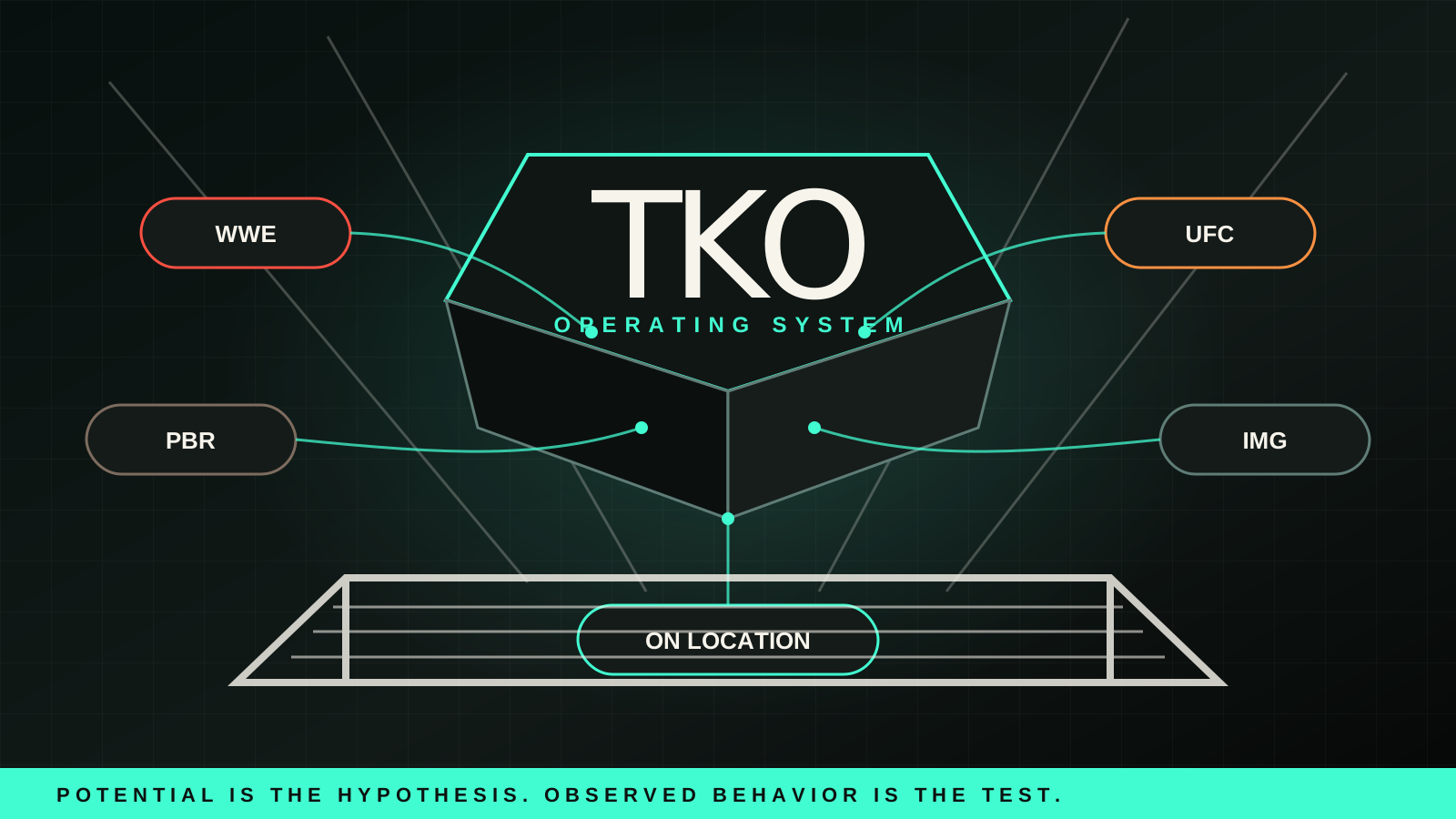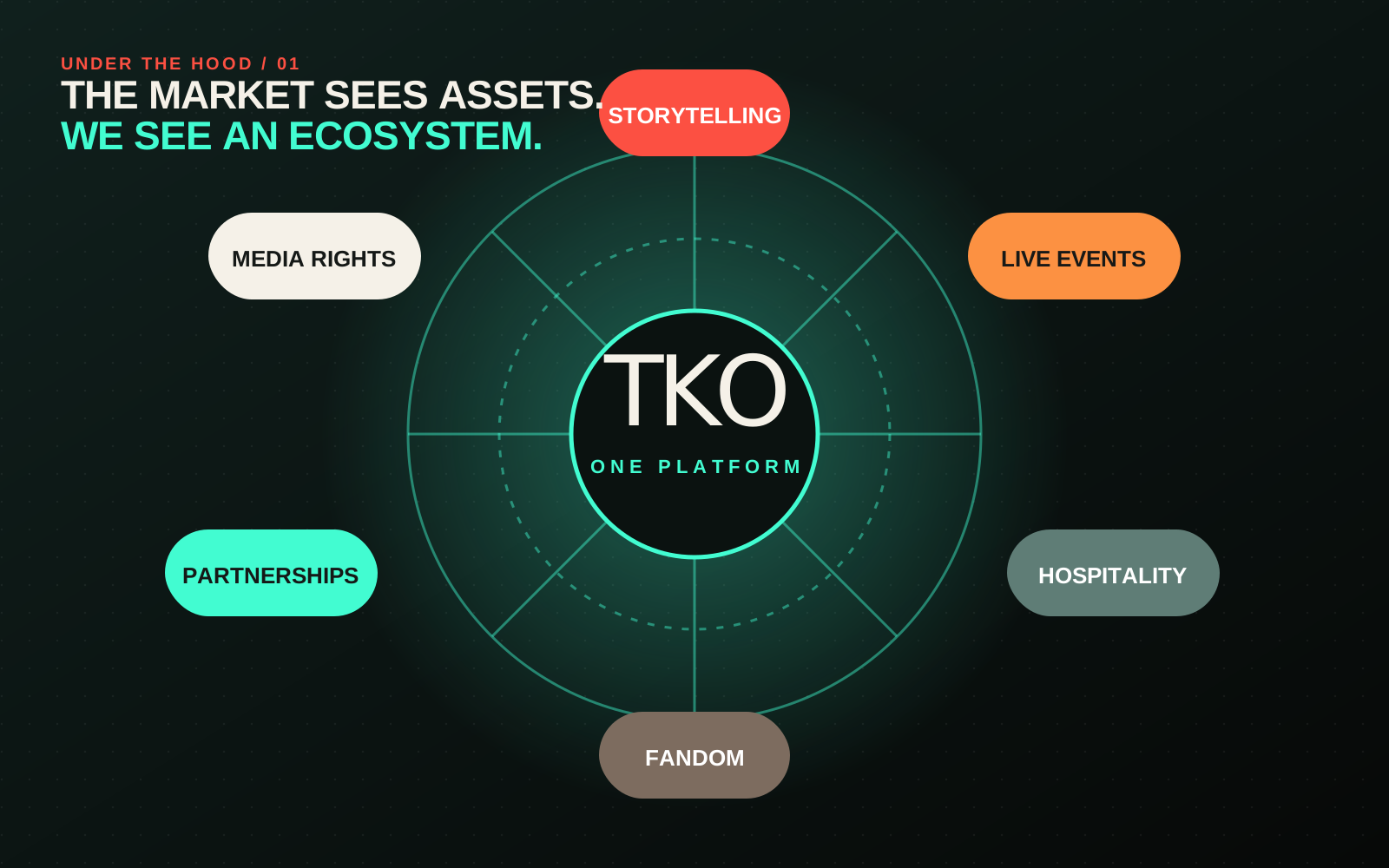
TKO brings together some of the most recognizable properties in sports and entertainment. But the real opportunity is not contained inside any one logo. It lives in the connections between them.
That distinction matters because a company that owns several successful businesses is not automatically a platform. Common ownership can create scale. It can simplify reporting. It can reduce duplicated work. None of that guarantees the businesses are becoming more valuable together.
A platform should do something more demanding.
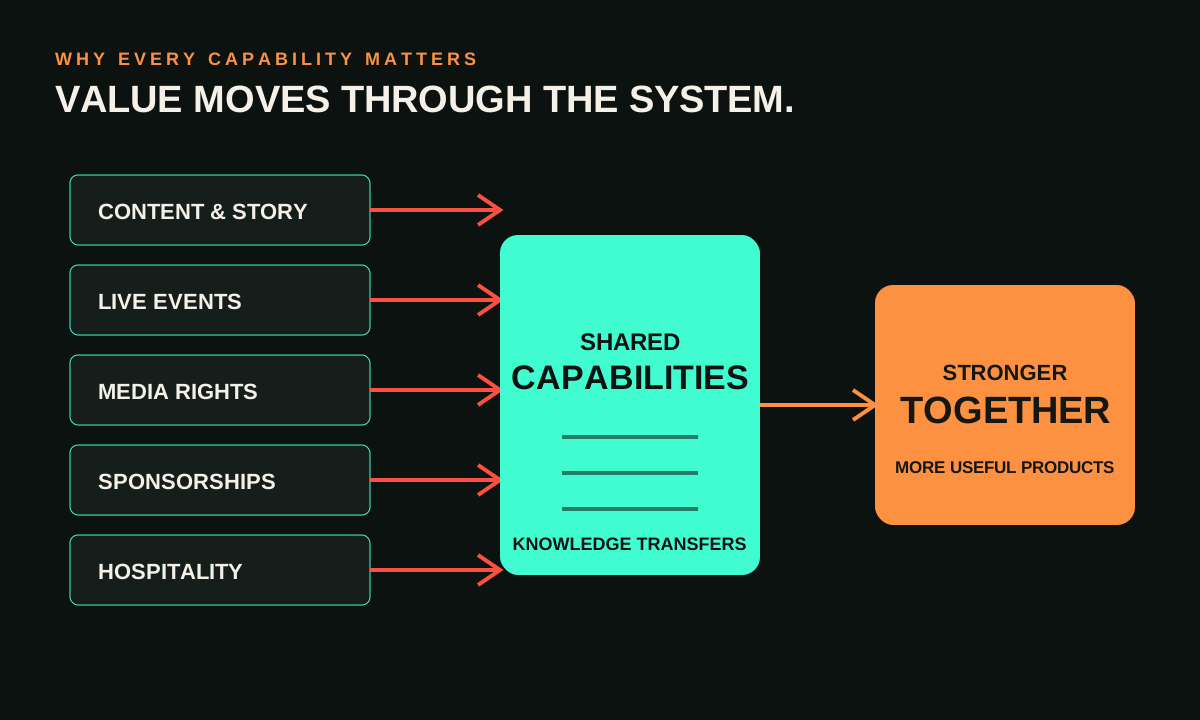
Every new capability should make the existing system more useful. Every property should contribute something the others could not create as efficiently alone. The company should gain leverage not merely because it is larger, but because knowledge, infrastructure, audiences, and commercial relationships can move through the system.
The question I keep coming back to
What happens if every new capability TKO develops makes the rest of the business stronger?
That is a very different company from one that simply owns a collection of successful brands.
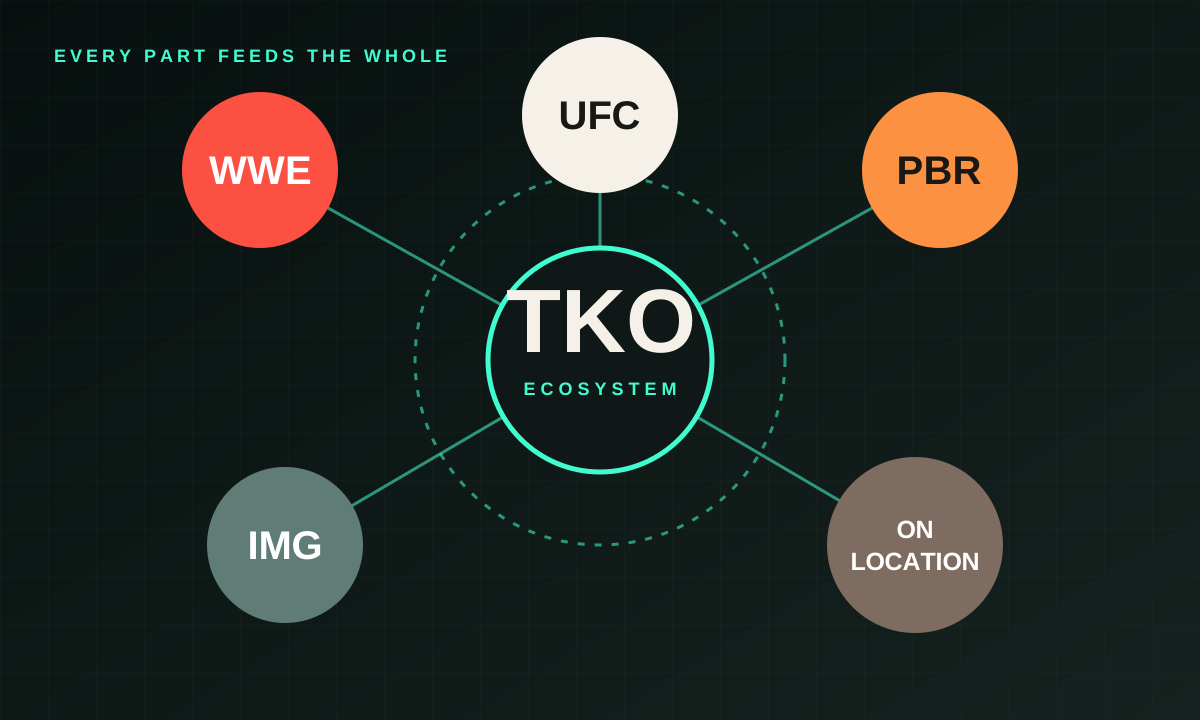
WWE creates weekly stories around recognizable personalities. UFC turns legitimate competition into meaningful stakes and star power. PBR adds a visually immediate live sport with its own culture, sponsors, calendar, and audience. IMG knows how to sell rights, partnerships, and services. On Location knows how to build premium experiences around events people already care about.
Individually, those are strong businesses. Together, they create the possibility of a system in which one unit’s strength becomes another unit’s capability.
An unmatched foundation is only the beginning
WWE and UFC give TKO a foundation few companies can reproduce. They have global recognition, recurring event calendars, deep libraries, passionate audiences, and a proven ability to turn moments into long-running commercial value.
That foundation creates leverage in negotiations, production, sponsorship, distribution, and live events. It also creates a temptation: to assume the scale of the assets proves the value of the platform.
It does not.
The foundation is the raw material. The platform thesis depends on what management builds on top of it. A strong asset can remain isolated. A powerful brand can generate cash without teaching the rest of the organization anything. TKO becomes more interesting when the capabilities beneath the brands can travel.
Transferable knowledge is the hidden asset
WWE knows how to create stars and sustain serialized attention. UFC knows how to present authentic competition and turn uncertainty into urgency. IMG knows rights, partnerships, production, and representation. On Location knows hospitality, ticket packaging, travel, and premium access.
The obvious version of synergy is cost reduction. Share a vendor. Centralize a department. Renegotiate a contract. Those efficiencies can matter, but they do not fully explain why the ecosystem could become more valuable over time.
The deeper opportunity is knowledge transfer.
Can an event property gain better rights execution because IMG is in the system? Can premium hospitality become a repeatable layer around more events because On Location is in the system? Can sponsor relationships enter through one property and expand through others? Can a city buy a coordinated calendar instead of one isolated event? Can one live night produce months of interviews, documentaries, social clips, merchandise, and follow-up programming?
If the answer becomes yes often enough, the company stops looking like a collection of assets and begins behaving like a machine.
Every live event is a story waiting to be told
An event is not only the thing that happens between the opening bell and the final image. It is raw material.
Interviews. Documentaries. Social content. Sponsor activation. Merchandise. Premium experiences. Local partnerships. A single night can become weeks or months of engagement if the organization knows how to collect, package, distribute, and extend it.
That is where the flywheel begins.
Better events create better stories. Better stories create deeper engagement. Deeper engagement supports stronger partners, rights, and experiences. Those economics fund more investment in the product. The improved product creates more reasons to care.
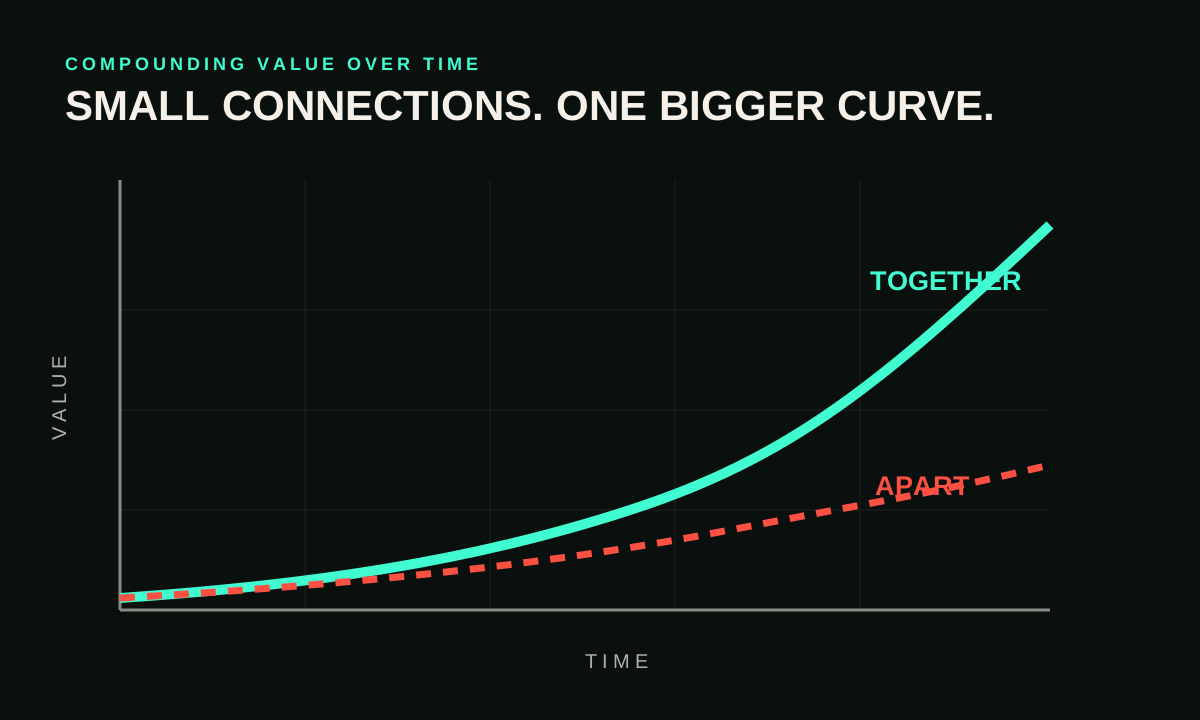
None of the steps need to be revolutionary. A platform compounds through repeated, coordinated improvements that strengthen the next cycle.
The one thing that gives me pause
Customer confidence.
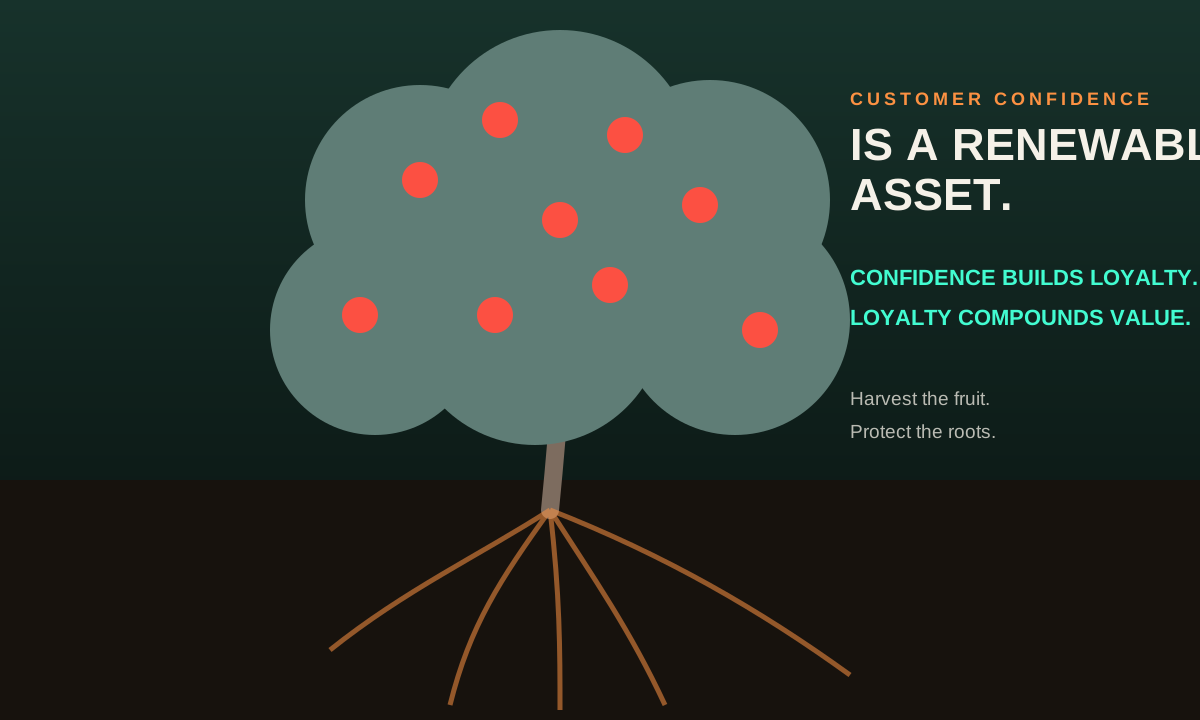
It is a renewable asset. You earn it. You protect it. You grow it. You do not spend it casually.
Platforms built around fandom can make the mistake of treating emotional attachment as an unlimited resource. A passionate audience may tolerate a price increase, a weak cycle, or a disappointing decision. That does not mean the relationship has no limit.
Every decision teaches the audience something about what the company values. Does it protect access? Does it deliver on promises? Does it reinvest? Does it understand why people formed the relationship in the first place?
A business can maximize the current harvest and weaken the orchard. The numbers may look strong until the damage appears in smaller future audiences, weaker attachment, less cultural relevance, and a product increasingly optimized for the people who can pay the most today.
Growth without spending the goodwill
Premium experiences are not inherently bad. Higher-value partnerships are not inherently bad. Global expansion is not inherently bad. The relevant question is whether growth adds to the core product or gradually replaces the people and promises that created the product’s value.
That is a stewardship problem.
Strong management should allocate capital like owners of a long-lived cultural asset, not operators trying to maximize one quarter. Build content that compounds. Keep entry points open. Invest in the next generation of fans. Protect the distinct identity of each property. Use shared infrastructure to make the visible product better, not more generic.
The goal is not to force WWE, UFC, and PBR to feel the same. The goal is to let them remain different while making the system beneath them more capable.
Consistency in the infrastructure. Difference in the product.
The long-term thesis
TKO has the assets, scale, leadership, and commercial tools to build something broader than a wrestling company or a combat-sports company.
The bull case is not simply that WWE and UFC continue growing. It is that the company learns how to make each new capability strengthen the whole system—without sanding away the identity of the properties inside it and without spending the customer confidence that makes the system renewable.
That is the platform opportunity.
But a platform thesis is still a hypothesis.
The next step is to test it.